Statutory Foundations and the Legal Nature of Renewal Clauses

Under the Thai legal framework, long-term occupation of immovable property is governed primarily by
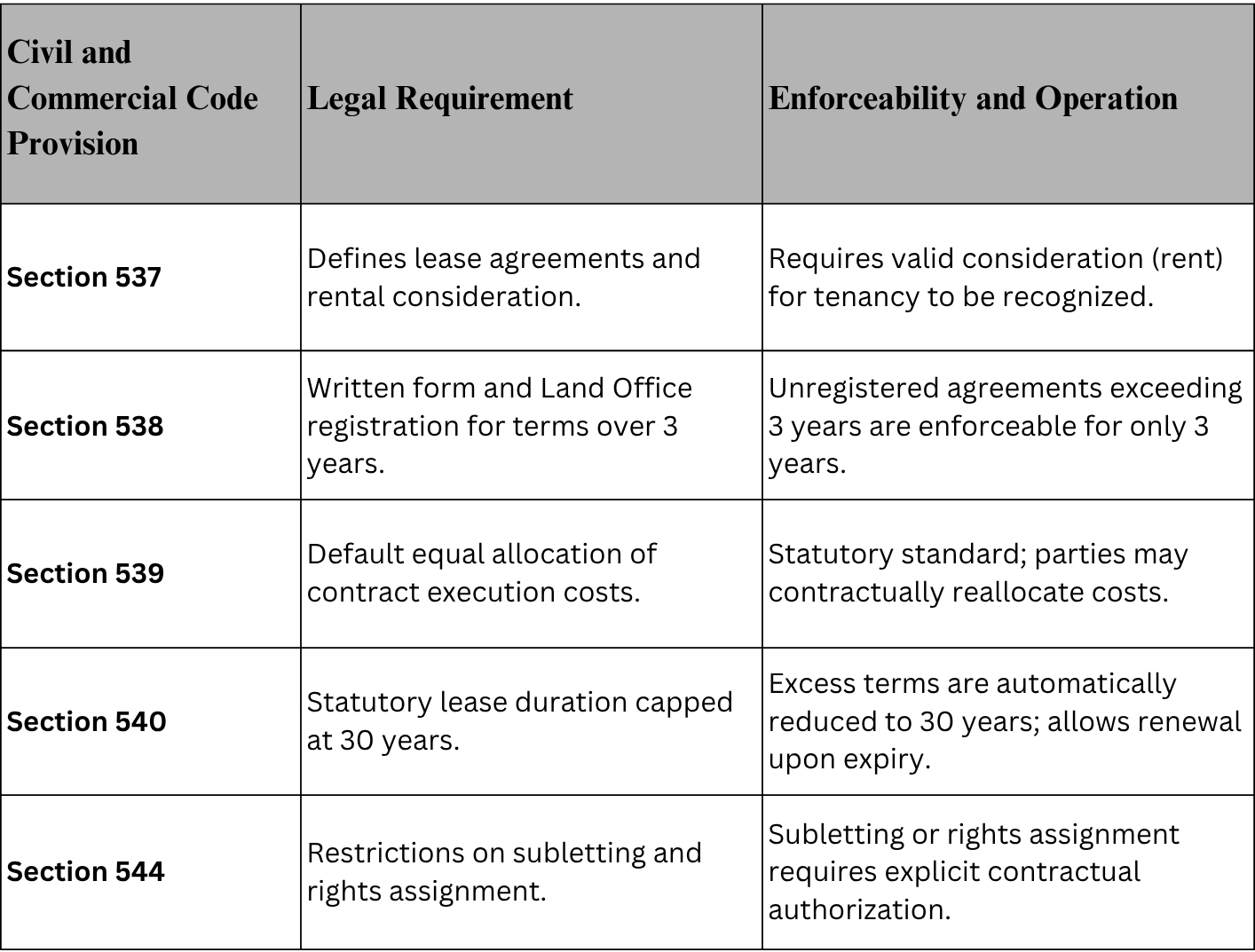
Chapter I, Title IV of the Civil and Commercial Code. Section 537 of the code defines a lease as a
contract wherein the lessor grants the lessee the use or benefit of property for a limited timeframe in
exchange for rent. While short-term residential tenancies require minimal formal oversight, long-term
tenancies face strict statutory mandates regarding term duration and public registration.
Pursuant to CCC Section 538, any lease of immovable property exceeding three years must be executed in writing and officially registered on the ownership title deed at the local Land Office. Failing to register a long-term lease reduces its legal enforceability to a maximum term of three years by operation of law. Furthermore, Section 540 imposes a strict statutory ceiling, stipulating that no property lease may exceed 30 years. Any agreement purporting to grant an initial term longer than 30 years is automatically
truncated to 30 years. Upon the expiration of the registered period, the tenancy extinguishes automatically under Section 564.
A widespread legal misconception centers on contractually promised renewal periods, commonly designated as "30+30" or "30+30+30" year options. Lessees often assume these clauses automatically guarantee continuous occupancy for 60 or 90 years. However, Thai jurisprudence distinguishes between real property rights (in rem) and personal contractual rights. A registered lease creates a real right that binds subsequent owners of the land. Conversely, an unexecuted renewal clause creates a personal contractual obligation that binds only the original signing lessor. If ownership of the property transfers via sale, corporate restructuring, or inheritance prior to the renewal date, the new registered owner is legally obligated to honor the remaining duration of the original registered lease, but is generally not bound to fulfill the predecessor's personal contractual promise to grant a new 30-year lease.
Consequently, renewing a 30-year lease cannot be accomplished through a simple extension letter or unilateral notice. Legally, a renewal requires the execution and formal registration of an entirely new lease agreement at the Land Office upon or near the expiration of the current term, subject to fresh owner consent, updated title due diligence, and statutory fee assessments.